投稿系统



Cold exposure aggravates cardiac dysfunction in aged mice via METTL14/TLR4 signaling
doi: 10.1515/fzm-2026-0017
-
Abstract:
Objective Epidemiological studies have established a strong association between low ambient temperature and increased cardiovascular mortality, particularly among older populations. However, the molecular mechanisms underlying cold-induced cardiovascular vulnerability during aging remain poorly understood. This study aimed to investigate the cardiac responses of naturally aged mice to prolonged cold stress and to elucidate the molecular pathways involved in cold-associated cardiac dysfunction. Methods Naturally aged mice (21 months old) were subjected to prolonged cold exposure, and cardiac function and structural remodeling were evaluated by echocardiography. Transcriptomic profiling was performed to identify differentially expressed genes (DEGs) and enriched biological pathways in cardiac tissues following cold exposure. The expression of key inflammatory mediators and methyltransferase-like 14 (METTL14) was further evaluated to explore potential molecular mechanisms involved in cold-induced cardiac injury. Results Prolonged cold exposure resulted in significant cardiac systolic dysfunction and structural remodeling in aged mice, characterized by reduced ejection fraction (EF) and fractional shortening (FS), accompanied by increased left ventricular internal diameter at end-systole (LVIDs). Transcriptomic analysis revealed extensive remodeling of the cardiac gene expression landscape, with DEGs predominantly enriched in inflammation-related signaling pathways. Consistently, multiple inflammatory mediators were markedly dysregulated in cold-exposed aged hearts. Notably, METTL14 expression was significantly upregulated following cold stress. Mechanistically, increased METTL14 was associated with enhanced cardiac inflammatory activation, accompanied by stimulation of the Toll-like receptor 4 (TLR4)/myeloid differentiation primary response 88 (MyD88)/nuclear factor kappa-B (NF-κB) signaling pathway. Conclusions Chronic cold exposure promotes cardiac inflammation, systolic dysfunction, and structural remodeling in aged mice. These findings identify METTL14 as a potential molecular mediator linking cold exposure to inflammatory cardiac remodeling through activation of the TLR4/MyD88/NF-κB pathway, providing new mechanistic insights into the increased cardiovascular risk associated with cold exposure in aging populations. Targeting METTL14-associated inflammatory signaling may provide a therapeutic approach for mitigating cold-induced cardiac vulnerability in susceptible individuals. -
Key words:
- cold exposure /
- aging /
- heart function /
- inflammation /
- METTL14
-

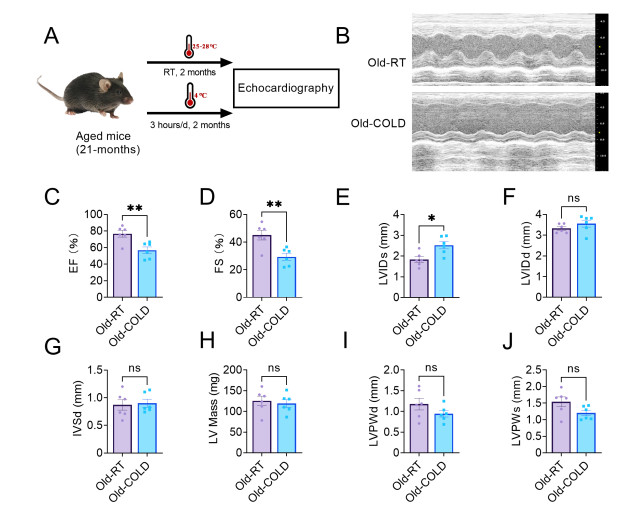
Figure 1. Cold exposure induces systolic dysfunction in aged mice
(A) Schematic illustration of the experimental protocol. Twenty-one-month-old mice were exposed to 4 ℃ for 3 h/day for 2 months. (B) Representative M-mode echocardiographic images of Old-RT and Old-COLD mice. Quantitative analysis of (C) ejection fraction (EF), (D) fractional shortening (FS), (E) left ventricular internal dimension at end-systole (LVIDs), (F) left ventricular internal dimension at end-diastole (LVIDd), (G) interventricular septal thickness at end-diastole (IVSd), (H) left ventricular (LV) mass, (I) left ventricular posterior wall thickness at end-diastole (LVPWd), and (J) left ventricular posterior wall thickness at end-systole (LVPWs). N = 6 per group. ns, not significant; *P < 0.05; **P < 0.01.

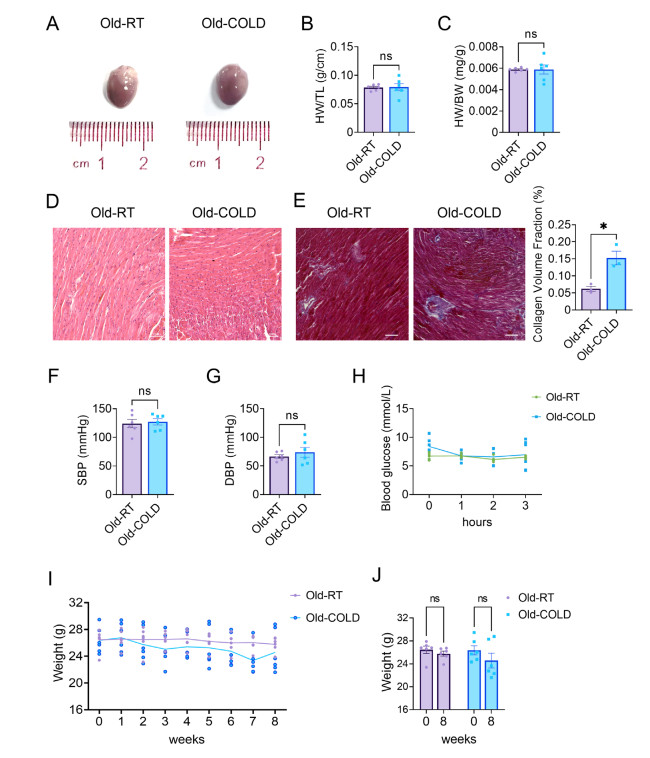
Figure 2. Cold exposure promotes cardiac remodeling in aged mice
(A) Representative heart photographs of Old-RT and Old-COLD mice. (B) Heart weight-to-tibia length (HW/TL) ratio in Old-RT and Old-COLD mice. (C) Heart weight-to-body weight (HW/BW) ratio in Old-RT and Old-COLD mice. (D) Representative H&E-stained cardiac sections from Old-RT and Old-COLD mice. Scale bar = 50 μm. (E) Representative Masson's trichrome-stained cardiac sections from Old-RT and Old-COLD mice. Scale bar = 50 μm. (F) Systolic blood pressure (SBP) and (G) diastolic blood pressure (DBP) measured using a non-invasive tail-cuff system. (H) Blood glucose levels in Old-RT and Old-COLD mice on the final day of the experiment. (I) Body weight of Old-RT and Old-COLD mice monitored throughout the experimental period. (J) Body weight of Old-RT and Old-COLD mice at weeks 0 and 8. N = 5 per group. ns, not significant; *P < 0.05.

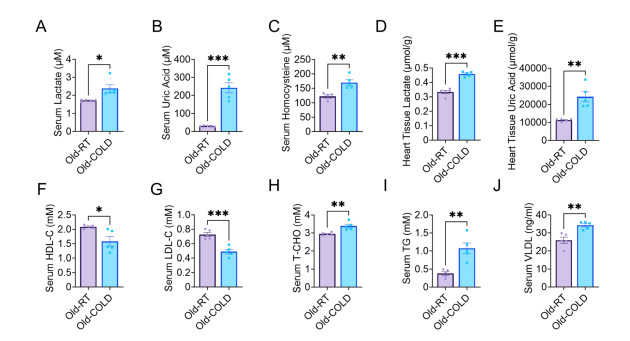
Figure 3. Cold exposure alters metabolic and cardiovascular risk-related biomarkers in aged mice
(A) Serum lactate levels in Old-RT and Old-COLD mice. (B) Serum uric acid levels in Old-RT and Old-COLD mice. (C) Serum homocysteine levels in Old-RT and Old-COLD mice. (D) Cardiac tissue lactate levels in Old-RT and Old-COLD mice. (E) Cardiac tissue uric acid levels in Old-RT and Old-COLD mice. (F) Serum high-density lipoprotein cholesterol (HDL-C) levels in Old-RT and Old-COLD mice. (G) Serum low-density lipoprotein cholesterol (LDL-C) levels in Old-RT and Old-COLD mice. (H) Serum total cholesterol (T-CHO) levels in Old-RT and Old-COLD mice. (I) Serum triglyceride (TG) levels in Old-RT and Old-COLD mice. (J) Serum very low-density lipoprotein (VLDL) levels in Old-RT and Old-COLD mice. N = 5 per group. *P < 0.05, **P < 0.01, ***P < 0.001.

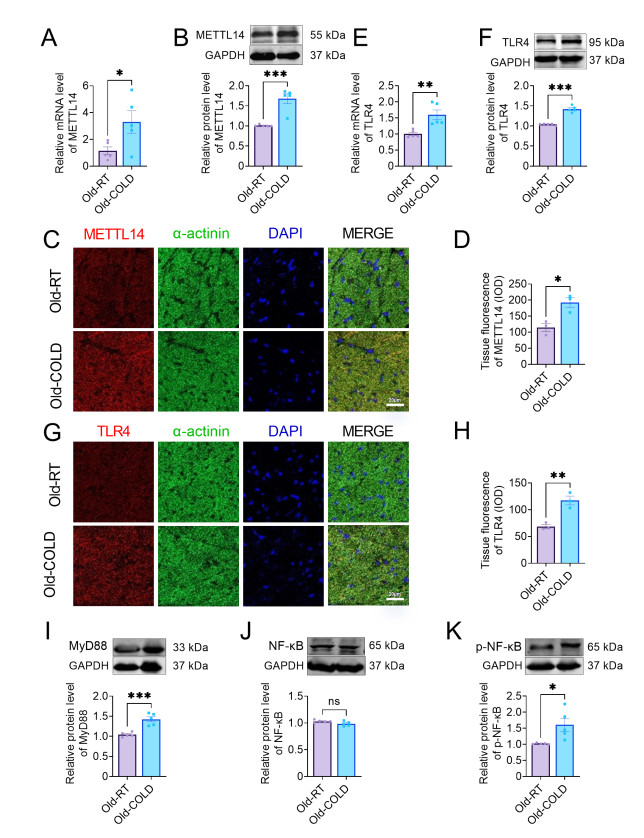
Figure 4. Cold exposure activates METTL14-associated TLR4/MyD88/NF-κB inflammatory signaling in aged mouse hearts
(A) Cardiac mRNA expression levels of methyltransferase-like 14 (METTL14) in Old-RT and Old-COLD mice, as determined by qRT-PCR. N = 5 per group. (B) Representative Western blots and densitometric quantification of METTL14 protein expression in mouse hearts. N = 5 per group. (C) Representative immunofluorescence images showing METTL14 expression in cardiac tissues (red, METTL14; green, α-actinin; blue, DAPI) and (D) corresponding quantitative analysis. Scale bar = 20 μm. N = 3 per group. (E) Cardiac mRNA expression levels of Toll-like receptor 4 (TLR4) in Old-RT and Old-COLD mice, as determined by qRT-PCR. N = 5 per group. (F) Representative Western blots and densitometric quantification of TLR4 protein expression in mouse hearts. N = 5 per group. (G) Representative immunofluorescence images showing TLR4 expression in cardiac tissues (red, TLR4; green, α-actinin; blue, DAPI) and (H) corresponding quantitative analysis. Scale bar = 20 μm. N = 3 per group. (I) Representative Western blots and densitometric quantification of MyD88 protein expression in mouse hearts. N = 5 per group. (J) Representative Western blots and densitometric quantification of NF-κB protein expression in mouse hearts. N = 5 per group. (K) Representative Western blots and densitometric quantification of phosphorylated NF-κB (p-NF-κB) in mouse hearts. N = 5 per group. ns, not significant; *P < 0.05, **P < 0.01, ***P < 0.001.
Table 1. Primer sequences
Genes Primer sequences (5'-3') TNF-α Forward: ACCCTCACACTCACAAACCAC (Mouse) Reverse: ACAAGGTACAACCCATCGGC IL-1β Forward: ATGCCACCTTTTGACAGTGAT (Mouse) Reverse: ATGTGCTGCTGCGAGATTTG p16 Forward: CGTACCCCGATTCAGGTGATG (Mouse) Reverse: AGAAGGTAGTGGGGTCCTCG Mettl14 Forward: CTCCTGCAGCCACTGATCTA (Mouse) Reverse: AGCAGGAGAAACAGTGACGA TLR4 Forward: AATCCCTGCATAGAGGTAGTTCC (Mouse) Reverse: CTTCAAGGGGTTGAAGCTCAG ICAM1 Forward: ATGGCTTCAACCCGTGCC (Mouse) Reverse: TCAGGGAGGTGGGGCTTG IL-6 Forward: ATGAAGTTCCTCTCTGCAAGAGACT (Mouse) Reverse: TTAGCCACTCCTTCTGTGACTCC GAPDH Forward: AACTTTGGCATTGTGGAAGG (Mouse) Reverse: ACACATTGGGGGTAGGAACA TNF-α, tumor necrosis factor-α; IL, interleukin; TLR, to l-like receptor; ICAM1, interce lular ce l adhesion molecule-1; GADPH, glyceraldehyde-3-phosphate dehydrogenase.  下载: 导出CSV
-
[1] Berko J, Ingram D D, Saha S, et al. Deaths attributed to heat, cold, and other weather events in the United States, 2006-2010. Natl Health Stat Report, 2014; 76: 1-15. [2] Zhou M G, Wang L J, Liu T, et al. Health impact of the 2008 cold spell on mortality in subtropical China: The climate and health impact national assessment study (CHINAs). Environ Health, 2014; 13: 60. doi: 10.1186/1476-069X-13-60 [3] Ogawa M, Tanaka F, Onoda T, et al. A community based epidemiological and clinical study of hospitalization of patients with congestive heart failure in Northern Iwate, Japan. Circ J, 2007; 71(4): 455-459. doi: 10.1253/circj.71.455 [4] Zhang J, Xu Z, Zhang J, et al. Current status and time trends in the burden of environmental heat and cold exposure among the population aged 60 years and older: An analysis for the Global Burden of Disease Study 2021. BMC Public Health, 2025; 25(1): 3892. doi: 10.1186/s12889-025-25115-8 [5] Moghadamnia M T, Ardalan A, Mesdaghinia A, et al. Ambient temperature and cardiovascular mortality: A systematic review and meta-analysis. PeerJ, 2017; 5: e3574. doi: 10.7717/peerj.3574 [6] Sheth T, Nair C, Muller J, et al. Increased winter mortality from acute myocardial infarction and stroke: The effect of age. J Am Coll Cardiol, 1999; 33(7): 1916-1919. doi: 10.1016/S0735-1097(99)00137-0 [7] Requia W J, Vicedo-Cabrera A M, de Schrijver E, et al. Low ambient temperature and hospitalization for cardiorespiratory diseases in Brazil. Environ Res, 2023; 231(Pt 3): 116231. [8] Chen Z, Liu P, Xia X, et al. The underlying mechanisms of cold exposure-induced ischemic stroke. Sci Total Environ, 2022; 834: 155514. doi: 10.1016/j.scitotenv.2022.155514 [9] Zhou E, Zhang L, He L, et al. Cold exposure, gut microbiota and health implications: A narrative review. Sci Total Environ, 2024; 916: 170060. doi: 10.1016/j.scitotenv.2024.170060 [10] Farbu E H, Höper A C, Reierth E, et al. Cold exposure and musculoskeletal conditions: A scoping review. Front Physiol, 2022; 13: 934163. doi: 10.3389/fphys.2022.934163 [11] Ziętak M, Kovatcheva-Datchary P, Markiewicz L H, et al. Altered microbiota contributes to reduced diet-induced obesity upon cold exposure. Cell Metab, 2016; 23(6): 1216-1223. doi: 10.1016/j.cmet.2016.05.001 [12] Su D, Song Y, Li D, et al. Cold exposure affects glucose metabolism, lipid droplet deposition and mitophagy in skeletal muscle of newborn goats. Domest Anim Endocrinol, 2024; 88: 106847. doi: 10.1016/j.domaniend.2024.106847 [13] Zhang D, Ma S, Wang L, et al. Min pig skeletal muscle response to cold stress. PLoS One, 2022; 17(9): e0274184. doi: 10.1371/journal.pone.0274184 [14] Yin F Q, Xiao F H, Kong Q P. Factors involved in human healthy aging: Insights from longevity individuals. Front Med, 2025; 19(2): 226-249. doi: 10.1007/s11684-024-1120-4 [15] Dong M, Yang X, Lim S, et al. Cold exposure promotes atherosclerotic plaque growth and instability via UCP1-dependent lipolysis. Cell Metab, 2013; 18(1): 118-129. doi: 10.1016/j.cmet.2013.06.003 [16] Thompson G E, Gardner J W, Bell A W. The oxygen consumption, fatty acid and glycerol uptake of the liver in fed and fasted sheep during cold exposure. Q J Exp Physiol Cogn Med Sci, 1975; 60(2): 107-121. [17] Sun Z, Cade R, Zhang Z, et al. Angiotensinogen gene knockout delays and attenuates cold-induced hypertension. Hypertension, 2003; 41(2): 322-327. doi: 10.1161/01.HYP.0000050964.96018.FA [18] Maltseva N, Borzova E, Fomina D, et al. Cold urticaria: What we know and what we do not know. Allergy, 2021; 76(4): 1077-1094. doi: 10.1111/all.14674 [19] Liu X, Liu H, Lin Y, et al. Deletion of METTL14, a key methylation regulator, attenuates vascular ageing. Eur Heart J, 2025; 46(45): 4953-4968. doi: 10.1093/eurheartj/ehaf476 [20] Du L, Li Y, Kang M, et al. USP48 is upregulated by Mettl14 to attenuate hepatocellular carcinoma via regulating SIRT6 stabilization. Cancer Res, 2021; 81(14): 3822-3834. doi: 10.1158/0008-5472.CAN-20-4163 [21] Wang M, Liu J, Zhao Y, et al. Upregulation of METTL14 mediates the elevation of PERP mRNA N(6) adenosine methylation promoting the growth and metastasis of pancreatic cancer. Mol Cancer, 2020; 19(1): 130. doi: 10.1186/s12943-020-01249-8 [22] Peng F, Xu J, Cui B, et al. Oncogenic AURKA-enhanced N(6)-methyladenosine modification increases DROSHA mRNA stability to transactivate STC1 in breast cancer stem-like cells. Cell Res, 2021; 31(3): 345-361. doi: 10.1038/s41422-020-00397-2 [23] Weng H, Huang H, Wu H, et al. METTL14 inhibits hematopoietic stem/progenitor differentiation and promotes leukemogenesis via mRNA m(6)A modification. Cell Stem Cell, 2018; 22(2): 191-205 e9. doi: 10.1016/j.stem.2017.11.016 [24] Kaikaew K, van den Beukel J C, Neggers S J C M M, et al. Sex difference in cold perception and shivering onset upon gradual cold exposure. J Therm Biol, 2018; 77: 137-144. doi: 10.1016/j.jtherbio.2018.08.016 [25] Karjalainen S. Thermal comfort and gender: A literature review. Indoor Air, 2012; 22(2): 96-109. doi: 10.1111/j.1600-0668.2011.00747.x [26] Kaikaew K, Steenbergen J, Themmen A P N, et al. Sex difference in thermal preference of adult mice does not depend on presence of the gonads. Biol Sex Differ, 2017; 8(1): 24. doi: 10.1186/s13293-017-0145-7 [27] Paal P, Brugger H, Kaser G, et al. Surviving 6 days in a crevasse. Lancet, 2013; 381(9865): 506. doi: 10.1016/S0140-6736(12)62032-7 [28] Zheng X, Wang Q, Zhang Y, et al. Intermittent cold stress enhances features of atherosclerotic plaque instability in apolipoprotein E‑deficient mice. Mol Med Rep, 2014; 10(4): 1679-1684. doi: 10.3892/mmr.2014.2464 [29] Cheng J, Su H, Xu Z, et al. Extreme temperature exposure and acute myocardial infarction: Elevated risk within hours? Environ Res, 2021; 202: 111691. doi: 10.1016/j.envres.2021.111691 [30] Li X, Yang Y, Zhang B, et al. Lactate metabolism in human health and disease. Signal Transduct Target Ther, 2022; 7(1): 305. doi: 10.1038/s41392-022-01151-3 [31] Chen X, Wang Y, Wang J N, et al. Lactylation-driven FTO targets CDK2 to aggravate microvascular anomalies in diabetic retinopathy. EMBO Mol Med, 2024; 16(2): 294-318. doi: 10.1038/s44321-024-00025-1 [32] Bornstein M R, Neinast M D, Zeng X, et al. Comprehensive quantification of metabolic flux during acute cold stress in mice. Cell Metab, 2023; 35(11): 2077-2092. doi: 10.1016/j.cmet.2023.09.002 [33] Lo A, Rickard A J, Karim N, et al. The association between uric acid and incident cardiovascular events amongst healthy, community-dwelling older adults. Geroscience, 2026; 48(4): 6075-6088. [34] Borghi C, Fogacci F, Cicero A F. Cicero, Crystal clear - Part Ⅱ : the role of uric acid in cardiorenal disease. Eur J Intern Med, 2025; 142: 106554. doi: 10.1016/j.ejim.2025.106554 [35] Prauchner G R K, Rieder A S, da Rosa L T, et al. Sex-specific mitigation of oxidative and inflammatory cardiac alterations by folic acid and simvastatin in chronic mild hyperhomocysteinemia. Biochem Pharmacol, 2025; 245: 117622. [36] Zheng S, Zhu W, Shi Q, et al. Effects of cold and hot temperature on metabolic indicators in adults from a prospective cohort study. Sci Total Environ, 2021; 772: 145046. doi: 10.1016/j.scitotenv.2021.145046 [37] Li C, Jiang X, Yuan Y, et al. METTL14 in tumor immunity: Epitranscriptomic regulation and therapeutic potential. Front Immunol, 2025; 16: 1709742. doi: 10.3389/fimmu.2025.1709742 [38] Chen J, Chen Y, Lin Z, et al. FUT2 enhances anti-tumor immunity in pancreatic cancer radiotherapy by driving FBXO2-mediated degradation of NR2F2. Cell Death Dis, 2025; 17(1): 126. doi: 10.1038/s41419-025-08378-2 [39] Yang X, Wang X, Lu W, et al. METTL14 integrates tumor-derived SAM to drive parabrachial epigenetic rewiring in pancreatic cancer. Neuron, 2025; 114 (2): 250-267. [40] Xu C, Zhang S, Liu Y, et al. ERbeta/circAHNAK axis inhibits USP10-FMR1 deubiquitination to prevent m(6)A-mediated ADAM17 decay and promote angiogenesis in clear cell renal cell carcinoma. Adv Sci (Weinh), 2025; 12(48): e09654. doi: 10.1002/advs.202509654 [41] He X, Gu Y, Lu G, et al. Reprogramming cysteine metabolism via METTL14-SLC7A11 axis promotes the progression of NAFLD and hepatocellular carcinoma. Life Sci, 2025; 380: 123965. doi: 10.1016/j.lfs.2025.123965 [42] Li X, Ling M, Wen Z, et al. USP5 promotes glycolysis of fibroblast-like synoviocytes by stabilizing the METTL14/m(6)A/GLUT1 axis in rheumatoid arthritis. Cell Death Discov, 2025; 12(1): 32. doi: 10.1038/s41420-025-02890-2 [43] Wei H, Li H, Miao D, et al. Dietary resveratrol supplementation alleviates cold exposure-induced pyroptosis and inflammation in broiler heart by modulating oxidative stress and endoplasmic reticulum stress. Poult Sci, 2024; 103(11): 104203. doi: 10.1016/j.psj.2024.104203 [44] Zhang Q, Wang L, Wang S, et al. Signaling pathways and targeted therapy for myocardial infarction. Signal Transduct Target Ther, 2022; 7(1): 78. doi: 10.1038/s41392-022-00925-z [45] Teng L, Shen Y, Qu Y et al. Carvacrol alleviates LPS-induced myocardial dysfunction by inhibiting the TLR4/MyD88/NF-kappaB and NLRP3 inflammasome in cardiomyocytes. J Inflamm (Lond), 2024; 21(1): 47. doi: 10.1186/s12950-024-00411-z [46] Teng L, Shen Y, Qu Y, et al. Cyasterone inhibits IL-1beta-mediated apoptosis and inflammation via the NF-kappaB and MAPK signaling pathways in rat chondrocytes and ameliorates osteoarthritisin vivo. Chin J Nat Med, 2023; 21(2): 99-112. -
 fzm-6-3-166_Supplementary data figS1.doc

-

 点击查看大图
计量
- 文章访问数: 71
- HTML全文浏览量: 39
- PDF下载量: 2
- 被引次数: 0